I tend to drag my feet when it comes to new technology. Sometimes I feel silly about this, because I'm supposed to be a member of the generation that is comfortable with the lightening fast changes technology throws at us. After all, I've been through the birth of the internet, the development of email, mp3s, texting, smart phones.
Somehow, I always find myself dragging my feet in the back of the line when it comes to new things. I don't want to be a cautionary tale, trying to figure out what to do with my collection of laser discs or HD DVDs.
Also, I'm never quite convinced that latest and greatest could ever actually be that great. I had a film camera for years after digital cameras started coming on the market, because I hated the pixelated look of the digital cameras. Nothing would ever be as good as film.
Umm, yeah.
When I started seeing Nooks, and Kindles, and other e-readers hit the market, I had an even more exaggerated response. Because it wasn't just another new technology. It seemed that these devices were taking away the very soul of reading: sitting quietly, cracking the cover, turning the pages.
After an extended trip where I lugged around 3 huge novels in my carry on, I began to see the advantage of an e-reader. When I stayed up late on vacation and finished my book and had nothing the read on the return journey, I felt myself warming up to the idea even more.
Turns out, I'm not completely against them. I've read a couple of books on my tablet and it's just fine.
However, and maybe this is me just being me and continuing to drag my feet in the face of technological advancement, e-readers are not going to replace books in my house.
My family struggles with screen time. We set time limits and make rules and do the best we can to keep the time our children are sitting in front of a screen as minimal as possible. But then we get tired, or have bad days, or it's cold outside, and it's just easier to put on a movie or let them play Angry Birds or Minecraft. I'm always harping on my kids to get off the computer, put down the iPad, turn off the TV and do something else. Play outside! Build a puzzle! Read a book!
If books are all electronic, how can I continue to help my children see the difference between unhealthy screen time habits and healthy book reading habits?
I'm a voracious reader. Once I start a book, I have a hard time putting it down until I've finished the entire story. I always have a long list of books I want to read. I buy books and then keep them forever, unwilling to part with stories and characters I love.
So, I felt completely sucker punched when I commented a few weeks ago to my eldest that I loved seeing him enjoy reading as much as I do, and he replied in shock, "What? I never see you reading!"
Sitting in front of a screen, my children can't differentiate if I'm skimming Facebook or absorbed in my favorite dystopian novel. They don't see me as a reader, no matter how many books are on my Kindle.
So that's why I'm going to continue to defend books. Good old fashioned, paper paged books. We will still make Sunday afternoon trips to the libraries. We will hold a physical book during bedtime family story time. I will continue to tell my children to put down the tablet and pick up a book.
What are your thoughts on e-readers, electronic books, and making your children readers?
Showing posts with label Books. Show all posts
Showing posts with label Books. Show all posts
Thursday, April 24, 2014


Wednesday, December 28, 2011
The Books of 2011
At one point, when I had a lot of time (seriously, when was that?), when I read a book, I would instantly write a review of it. It allowed me to reflect on my thoughts about the book and share them with others.
It has been over a year since I have shared any book reviews. I kept thinking that I would catch up. But I found that months after reading a book, the details, both of the story and of my thoughts, have faded. There as no way to make an single post for each book. So, instead, I will review the books I remember reading in 2011 (and maybe 2010 as well).
The Help by Kathryn Stockett

Set in 1960 Jackson County, Mississippi, this amazing book follows a young white woman who decides to tell the stories of black maids. These amazing women are at first hesitant to share their stories. Stories that have to do with the shame of having to use separate bathrooms, of leaving their own families to work for wealthy white women, of the abuse and death of their loved ones. Slowly, Skeeter, the free-thinking, spirited white girl, gains their trust and their stories. As she does so, she comes to realize that these women see every thing, they know every thing about the families they serve, but they are not granted any respect. How can they raise white children, only to have those children grow up and treat them the same way their parents did?
This book was absolutely amazing, the best book I read all year. I always feel proud of myself for reading books before they were made into movies. This book, I just felt proud to have read.
Water For Elephants by Sara Gruen
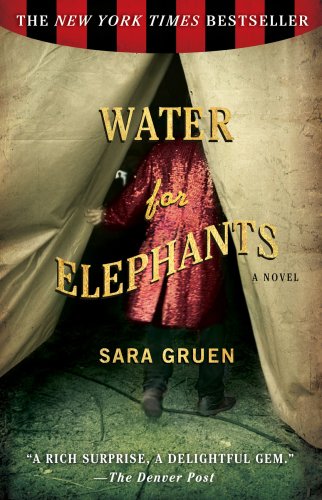
Ready to start a successful career, Jacob Jankowski suddenly finds himself struck by tragedy. In his desperation to escape, he jumps aboard a train. Chance would have it that is a circus train. Jacob slowly become a member of the circus as the keeper of the animals. However, he also becomes involved in the lives of the circus members themselves. There is brutality, selfishness, and greed, anything necessary to put on a good show. Jacob, the only character who tries to remain good, is often the victim in this story that is so much more than just a circus novel. This book was full of beautiful details about post-Depression circuses, alive with color and sound and activity. Although at times it was a little overly explicit, it was still a fun read.
Wicked by Gregory Maguire
 What does it mean to be wicked? Is good and evil just like history, dependent on who writes the story? That theme is at the heart of this amazing novel, set in the land of Oz, well before Dorothy ever arrived. Told from the view point of Elphaba, a green skinned girl, who, because of her obvious differences, is an outsider from the very beginning. Through her eyes and through her life, we are given a very different Oz, one where the Wizard of Oz is politically corrupt and attempting to create inequalities for talking animals and Munchinlanders. Elphaba does her best to combat the inequalities. And we cheer her on, because she is not the Wicked Witch of the West, but a brave, independent woman. However, she finds herself on the wrong side of history and is destroyed by a little girl with red shoes. Dark and serious, full of commentary on religion, politics, and concepts of fate and free will, this book is worth the read.
The Hitchhiker's Guide to the Galaxy by Douglas Adams

Just before the Earth is destroyed, Arthur Dent is saved by his friend Ford Prefect, someone he assumed was human, but is actually a researcher from another planet. Faced with being planetless, Arthur travels along since Ford throughout the galaxy, from one strange adventure to the next, along side characters such as Zaphod Beeblebrox, the eccentric President of the Galaxy, Trillian, a human like Arthur, and Marvin, a depressed robot. I adored this book, full of wry humor and commentary on the search for the meaning of life. After all, how many books will give you the answer to the meaning of Life, the Universe, and Everything?
The Book Thief by Markus Zusak

Set in World War II Germany, The Book Thief is the story of Liesel, a young foster daughter of poor parents. With no money and little happiness, Liesel attempts to improve her life by stealing, not money or food, but books. Reading these books, along with listening to her father's accordion's music, Liesel is able create some joy, a sense of normalcy. But the narrator of the book belies any joy that might be found in the story. For the narrator of the story is Death. When Hilter is taking over the world, and there is a Jew hidden in the basement, and a girl is stealing books, Death is an appropriate narrator. This book is heart-wrenching, beautiful, and worth reading.
-----------------------
Those were my top five books this year. I know I read more great books, but I just can't remember.
-------------------------------
Other books I read but didn't enjoy that much:
The Rule of Four by Ian Caldwell: This book attempted to be what Dan Brown's The DaVinci Code and Angels and Demons were, but fell well short. Based on an interesting premise of an ancient writing holding valuable secrets, this book made several mistakes. First, the ancient writing was obscure and not one that any casual reader would have heard of or be interested in. Second, the book failed to make any point as to how the hidden secrets might have any relevance to modern life.
The Maze Runner Trilogy by James Daschner: I read this in an attempt to fill the void left by finishing The Hunger Games. And I think the author also desperately wanted to do this. While the first book starts out just fine, the entire series based in a futuristic world plagued by a horrible virus falls flats. It attempts to examine themes of human experimentation, the concept of the greater good, and effects of biological warfare, but comes off disconnected. Many parts of the story never come together, are never explained, and the greatest mysteries remain just that.
The Forest of Hands and Teeth by Carrie Ryan: A post-zombie apocalyptic novel, literally, this story follows Mary, a girl growing up in an isolated village surrounded by a zombie filled forest. This book, and the other two in the series, are everything a zombie novel should be. A little scary, a little gory, and a little romantic. But they never jumped from being those little things to being big anything.
---------------------------
Trying to remember all the books, let alone the details of the books, was difficult. Next year, I'm going to do a better job. Or just read fewer books.
What did you read this year? What books did you love and what books did you hate? What should I read next year?
It has been over a year since I have shared any book reviews. I kept thinking that I would catch up. But I found that months after reading a book, the details, both of the story and of my thoughts, have faded. There as no way to make an single post for each book. So, instead, I will review the books I remember reading in 2011 (and maybe 2010 as well).
The Help by Kathryn Stockett
Set in 1960 Jackson County, Mississippi, this amazing book follows a young white woman who decides to tell the stories of black maids. These amazing women are at first hesitant to share their stories. Stories that have to do with the shame of having to use separate bathrooms, of leaving their own families to work for wealthy white women, of the abuse and death of their loved ones. Slowly, Skeeter, the free-thinking, spirited white girl, gains their trust and their stories. As she does so, she comes to realize that these women see every thing, they know every thing about the families they serve, but they are not granted any respect. How can they raise white children, only to have those children grow up and treat them the same way their parents did?
This book was absolutely amazing, the best book I read all year. I always feel proud of myself for reading books before they were made into movies. This book, I just felt proud to have read.
Water For Elephants by Sara Gruen
Ready to start a successful career, Jacob Jankowski suddenly finds himself struck by tragedy. In his desperation to escape, he jumps aboard a train. Chance would have it that is a circus train. Jacob slowly become a member of the circus as the keeper of the animals. However, he also becomes involved in the lives of the circus members themselves. There is brutality, selfishness, and greed, anything necessary to put on a good show. Jacob, the only character who tries to remain good, is often the victim in this story that is so much more than just a circus novel. This book was full of beautiful details about post-Depression circuses, alive with color and sound and activity. Although at times it was a little overly explicit, it was still a fun read.
Wicked by Gregory Maguire
What does it mean to be wicked? Is good and evil just like history, dependent on who writes the story? That theme is at the heart of this amazing novel, set in the land of Oz, well before Dorothy ever arrived. Told from the view point of Elphaba, a green skinned girl, who, because of her obvious differences, is an outsider from the very beginning. Through her eyes and through her life, we are given a very different Oz, one where the Wizard of Oz is politically corrupt and attempting to create inequalities for talking animals and Munchinlanders. Elphaba does her best to combat the inequalities. And we cheer her on, because she is not the Wicked Witch of the West, but a brave, independent woman. However, she finds herself on the wrong side of history and is destroyed by a little girl with red shoes. Dark and serious, full of commentary on religion, politics, and concepts of fate and free will, this book is worth the read.The Hitchhiker's Guide to the Galaxy by Douglas Adams
Just before the Earth is destroyed, Arthur Dent is saved by his friend Ford Prefect, someone he assumed was human, but is actually a researcher from another planet. Faced with being planetless, Arthur travels along since Ford throughout the galaxy, from one strange adventure to the next, along side characters such as Zaphod Beeblebrox, the eccentric President of the Galaxy, Trillian, a human like Arthur, and Marvin, a depressed robot. I adored this book, full of wry humor and commentary on the search for the meaning of life. After all, how many books will give you the answer to the meaning of Life, the Universe, and Everything?
The Book Thief by Markus Zusak
Set in World War II Germany, The Book Thief is the story of Liesel, a young foster daughter of poor parents. With no money and little happiness, Liesel attempts to improve her life by stealing, not money or food, but books. Reading these books, along with listening to her father's accordion's music, Liesel is able create some joy, a sense of normalcy. But the narrator of the book belies any joy that might be found in the story. For the narrator of the story is Death. When Hilter is taking over the world, and there is a Jew hidden in the basement, and a girl is stealing books, Death is an appropriate narrator. This book is heart-wrenching, beautiful, and worth reading.
-----------------------
Those were my top five books this year. I know I read more great books, but I just can't remember.
-------------------------------
Other books I read but didn't enjoy that much:
The Rule of Four by Ian Caldwell: This book attempted to be what Dan Brown's The DaVinci Code and Angels and Demons were, but fell well short. Based on an interesting premise of an ancient writing holding valuable secrets, this book made several mistakes. First, the ancient writing was obscure and not one that any casual reader would have heard of or be interested in. Second, the book failed to make any point as to how the hidden secrets might have any relevance to modern life.
The Maze Runner Trilogy by James Daschner: I read this in an attempt to fill the void left by finishing The Hunger Games. And I think the author also desperately wanted to do this. While the first book starts out just fine, the entire series based in a futuristic world plagued by a horrible virus falls flats. It attempts to examine themes of human experimentation, the concept of the greater good, and effects of biological warfare, but comes off disconnected. Many parts of the story never come together, are never explained, and the greatest mysteries remain just that.
The Forest of Hands and Teeth by Carrie Ryan: A post-zombie apocalyptic novel, literally, this story follows Mary, a girl growing up in an isolated village surrounded by a zombie filled forest. This book, and the other two in the series, are everything a zombie novel should be. A little scary, a little gory, and a little romantic. But they never jumped from being those little things to being big anything.
---------------------------
Trying to remember all the books, let alone the details of the books, was difficult. Next year, I'm going to do a better job. Or just read fewer books.
What did you read this year? What books did you love and what books did you hate? What should I read next year?
Thursday, February 3, 2011
Tattooes, Fire, and Hornets
This triology seemed like it was everywhere. At every store, on every website, in everyone's hand at the pool and on the bus.


Which is honestly why I read it. Because everyone else was. I had no idea what the books were about. Reading reviews, I got the vague idea that they took place in Sweden and were supposed to be about corporate crimes and such. These are usually not the type of books that I read. But like I said, they were everywhere. So I read them.
I wish that I had written my thoughts about the books right after I actually read them. It's been several months and the details about the plot are getting a little fuzzy and the books have all run together. I'm not completely sure if I could differentiate things that happened in the first book from things that happened in the second book.
A basic overview from what I remember: In The Girl with the Dragon Tatoo, financial journalist Mikael Blomkvist has fallen in the public eye. Accused of libel and sentenced to serve time in jail, he is given the chance to clear his name by an elderly business man. The condition is that he needs to solve the disappearance of the elderly man's niece, who has been missing for nearly 40 years.
In The Girl Who Played with Fire, and The Girl Who Kicked the Hornet's Nest, Mikael Blomkvist is reinstated at his magazine and delves into exposing Sweden's sex trafficking business. However, the research runs deeper and involves more people than could be imagined. After the murder of the primary investigation, the story turns from interesting to personal.
And where is the girl in all this? Lisbeth Salander: tatooed, skinny, computer hacking, socially awkward misfit. Through bizarre circumstances, she ends up assisting Mikael Blomkvist with his research. Initially, her story feels separate from everything else. Her fight with social services, her difficulty with self identity and relationships, and ultimately her abuse, both by individual people and by the system. However, as the story progresses through the three novels, I found myself realizing that her experiences had everything to do with the story. The circumstances that lead to the disappearance of niece in the first novel, the culture around sex trafficking: it all pointed to how such terrible things could happen to Lisbeth Salander.
I'm not sure I could actually recommend these books. They are graphic and disturbing. Actually my biggest complaint with the books is much more trivial. I kept feeling that the novels were in desperate need of a good editing. There were so many details that felt completely trivial: e-mail addresses, descriptions of computers, explanations of RAM and bytes. There was also a abundance of Swedish locations, that may make the book more familiar to, well, Swedes, was just nearly oppressive for non-Swedes. The books were published after the author, Stiegg Larsson, passed away. With a post-humous publication, it doesn't feel appropriate to make alterations to the author's work. But it doesn't change my mind that it's what the books need.
These books were completely out of my comfort level. They were disturbing. They were occasionally too much to actually enjoy. But in the end, it was hard to put the books down and impossible to not cheer for the heroine.
Sunday, December 19, 2010
Sunday Outing
What started out as a method to manage our budget has now become a favorite weekly tradition.
Each Sunday afternoon, we drive to down today to the public library.
We get to stroll through downtown, past the playground and fountains.
We return the stacks of books we enjoyed during the week. Bug and Monkey have decided they must take turns, returning the books one at a time. My apologies for anyone behind us at the book return slot.

We wander to the children's section (which by the way, has a special slide entrance.)
The boys hunt for books for the next week. Anything from picture books to magic books to all about dinosaurs. Or Monkey's favorite: Where's Waldo and I Spy books.

Most times, we also sit for afternoon story time.
Then, there is more hunting for books. Making sure we have the rest of the Magic Tree House books or that we've placed a hold on the next Rick Riordan book. We check out classic Disney movies.
There are usually so many other children there, playing with trains, reading stories, or doing the bead mazes, that there is almost no need to shush the boys. Almost.

Then there is the check-out, which Bug now manages by himself.


We then haul our books out to the car. And since our library has a 75 book limit (per card), it is very literally a haul out to the car.
This new little tradition not only mean that we haven't spent a dime at a book store in nearly a year, but that we have new books every night for story time.
Because there just can't be enough time spent like this.

Wednesday, September 8, 2010
Mockingjay
Considering it was only a two month wait for Mockingjay to be released (instead of the years for the last Harry Potter), it felt like an exceedingly long time before the brown box from Amazon containing my copy showed up on my porch.

And then, with my work schedule, it was longer before I could read it.
I started yesterday afternoon. I just finished.
And now I need to talk.
I'm not sure what to think. I'm not sure what my feelings are about Mockingjay. I feel similar to how I did when Lost was over. I had spent so much time and effort loving and enjoying the whole journey that to say I'm disappointed in the destination is painful. But as I closed the book, it was all I could do to choke back the tears. I felt empty, broken, and sad.
I adore Hunger Games and Catching Fire. I re-read them earlier this week. Once again, I got caught up in the horror, the tradegy, the heart break, the fight for survival. I felt Katniss's despair, her uncertainty, her fury so much more this time.
While Hunger Games and Catching Fire are a page-turning, adrenaline pumping, story about survival and humanity, Mockingjay feels more like a documentary of the brutality of war. Page after page of atrocities. So much that I feel like I may turn into Katniss and lock myself away from the world. While violence levels picks up, the emotions tone down.
I love Katniss in the first two books. Her lack of self-awareness, her love of her sister, her survival skills. However, as Mockingjay progresses, the Katniss that was the heroine of before slips away. On one hand, I can't blame her. She's seen so much terror. Just look at the other victors of the Hunger Games, each one fighting to maintain their sanity.
But, on the other hand, with all great heroes (and heroines) there comes a point when they realize what they need to do. When they become what is needed. When they rise above. This never happens for Katniss. I kept waiting for it. It never happened.
She recognizes that she is hurting people. She recognizes she puts people in danger. She never changes. She leads a mission that occupies much of the last chapter and succeeds in nothing except getting people she cares about killed. The goal of the mission is never accomplished. It feels all the death and destruction was pointless.
And in the end, the thing that matters most, the thing that had driven her and motivated her, is taken from her.
I do admire Suzanne Collins in stepping out from other authors with their natural inclination to protect their characters. Things may happen to them, bad things, but they usually come out whole and even better on the other side. Collins does not do this. She lets horrible things happen to Katniss, to Peeta, to Gale, to Prim. She lets them break, burn, and die. And, as a reader, it's painful. Almost too much so.
The thing that bothers me the most is that this was a book about what humanity means, what we are willing to do and not willing to do. And in the end, the characters seem they were willing to do anything. Even reinstate the horrors that were brought down on them. In the end, they didn't seem different from the enemy. There was no lesson learned. No victory won.
Maybe there's no other way for the book to end. If it has been real life, this is how it would have gone. Katniss, scarred and broken, no normal life to return to. No real hope, no end of of the nightmares.
But I don't read for real life. I want my happy ending.
And even if not a happy ending, an ending that made all the suffering and horror worth it. And ending that mattered.
Wednesday, June 9, 2010
The Hunger Games
I have added another series of books to my all time favorite reads. The Hunger Games. While this may be jumping on the popular bandwagon, I don't care. Sometimes (just sometimes) things are popular for a reason (except for skinny jeans. Those will always be a bad idea.)
I've already expressed my love for dystopian novels. Combine that with a ease of reading that come with young adult writing, the complete page-turner adventure, and beautiful character development of Suzanne Collin's novels, and these novels are just about perfect.


I've already confessed that I have a hard time putting down a book once I've started it. But with these two books, it was almost a physical effort for me to close the book, put it down, and walk away. I was nearly late for work twice while reading these, because I became completely engrossed in the story while eating my cereal, only to look up at the clock in a panic.
The Hunger Games and Catching Fire, the first two books in Suzanne Collins' Hunger Games Trilogy, take place in the not-too-far future, in the remains of what used to be North America. Now, The Capitol, a large prosperous city, rules the surrounding 12 Districts with a combination of a heavy hand and emotional suppression. Each year, The Capitol reminds the Districts of their complete domination by requiring each District to send two children, a boy and a girl, to The Capitol to compete in the Hunger Games, televised gladiator-esque survivor games, where the only way to win and get the chance to go home is to be the last one standing. The games are quite literally, a battle to the death.
Katniss Everdeen is a 16 year old girl who finds herself headed to the Hunger Games through an sacrificial act of love.
Beyond that, I don't want to reveal any more of the storyline. Because you absolutely must read these books yourself. And then let me know what you think, because I'm dying to talk to people about these books!
It is rare to get a novel with a strong female as a main character and have the novel still be appealing to male and female readers. But given the fact that Hubster read these books even faster as I did (lucky guy, staying home all day), I would say Collins succeeded in that regard.
Every page is suspenseful, each chapter ending left me hanging in such a way that I had to keep reading. Although, be warned, while young adult, the story lives up to it's theme and is violent and often jarring. It's probably not appropriate for readers under the age of 13.
But more than the suspense and captivating story, are the characters. Collins makes her characters so multi-layered, so full of subtleties, they are completely believable.
Katniss has been in survival mode nearly her whole life, being the primary means of support for her family since the death of her father. While this mind-set prepares her for the emotional and physical onslaught of the Games, it has not made her aware of people. While completely devoted to her little sister, she has an inability to read other people, to empathize, and to relate. This, combined with her nearly subconscious sense of superiority makes her a flawed, thus likable heroine.
The Hunger Games delve into the destructive decadency of modern society, the inequalities created by complete power, the hopeless acceptance of the oppressed, and the effects of exposure to violence. Ultimately, it asks what will you give, and what will you take, to maintain one's humanity?
The third and final book of the trilogy, Mockingbird, comes out in August. I plan on having it in my hands the day it is released and not letting go for the rest of the ride.
I've already expressed my love for dystopian novels. Combine that with a ease of reading that come with young adult writing, the complete page-turner adventure, and beautiful character development of Suzanne Collin's novels, and these novels are just about perfect.
I've already confessed that I have a hard time putting down a book once I've started it. But with these two books, it was almost a physical effort for me to close the book, put it down, and walk away. I was nearly late for work twice while reading these, because I became completely engrossed in the story while eating my cereal, only to look up at the clock in a panic.
The Hunger Games and Catching Fire, the first two books in Suzanne Collins' Hunger Games Trilogy, take place in the not-too-far future, in the remains of what used to be North America. Now, The Capitol, a large prosperous city, rules the surrounding 12 Districts with a combination of a heavy hand and emotional suppression. Each year, The Capitol reminds the Districts of their complete domination by requiring each District to send two children, a boy and a girl, to The Capitol to compete in the Hunger Games, televised gladiator-esque survivor games, where the only way to win and get the chance to go home is to be the last one standing. The games are quite literally, a battle to the death.
Katniss Everdeen is a 16 year old girl who finds herself headed to the Hunger Games through an sacrificial act of love.
Beyond that, I don't want to reveal any more of the storyline. Because you absolutely must read these books yourself. And then let me know what you think, because I'm dying to talk to people about these books!
It is rare to get a novel with a strong female as a main character and have the novel still be appealing to male and female readers. But given the fact that Hubster read these books even faster as I did (lucky guy, staying home all day), I would say Collins succeeded in that regard.
Every page is suspenseful, each chapter ending left me hanging in such a way that I had to keep reading. Although, be warned, while young adult, the story lives up to it's theme and is violent and often jarring. It's probably not appropriate for readers under the age of 13.
But more than the suspense and captivating story, are the characters. Collins makes her characters so multi-layered, so full of subtleties, they are completely believable.
Katniss has been in survival mode nearly her whole life, being the primary means of support for her family since the death of her father. While this mind-set prepares her for the emotional and physical onslaught of the Games, it has not made her aware of people. While completely devoted to her little sister, she has an inability to read other people, to empathize, and to relate. This, combined with her nearly subconscious sense of superiority makes her a flawed, thus likable heroine.
The Hunger Games delve into the destructive decadency of modern society, the inequalities created by complete power, the hopeless acceptance of the oppressed, and the effects of exposure to violence. Ultimately, it asks what will you give, and what will you take, to maintain one's humanity?
The third and final book of the trilogy, Mockingbird, comes out in August. I plan on having it in my hands the day it is released and not letting go for the rest of the ride.
Sunday, May 16, 2010
A rabbit, a mouse, and some opinions
I realized that I have been completely delinquent in my book reviews. Since the time I posted my last review, I've read 3 more books.
Two of those books, I'm going to talk about at once.
The Miraculous Journey of Edward Tulane and The Tale of Desperaux, by Kate DiCamillo.


I guess it's really not fair to lump this two books into one post, just because they are by the same author. But the real reason I'm doing it is because my feelings about both books are very similar.
After Bug and I read Because of Winn Dixie, we were very excited to read more of DiCamillo's books. She is an amazing writer. Her stories are captivating.
The Miraculous Journey of Edward Tulane follows the adventures of Edward, a large china rabbit. He is the toy of a little girl in a well-to-do family. And he thinks very highly of himself, so much so that he is annoyed with the attitudes of those around him, which he finds condescending. He wants nothing more than to be admired. It is obvious that Edward is about to be toppled from his high horse. After becoming lost in the sea, then in a dump, passing hands from a fisherman to a hobo to a backwoods boy, Edward slowly changes. He comes to understand that love comes from unexpected sources.
DiCamillo's metaphors are beautiful. This book made Bug's and my heart ache along with Edward's. The final chapter, I'll admit, made tears run down my cheeks.
The Tale of Desperaux, a story of a mouse, a rat, a servant girl, soup, and a princess named Pea, is intriguing. Desperaux, a small mouse with large ears and bigger dreams, falls in love with a human princess and because of this love, is banished from the mouse kingdom. When his beloved princess is captured by a vengeful rat and a desperate servant girl, Desperaux faces all his fears to rescue her.
The story plays with light and dark, both literally and metaphorically are well-done. Desperaux is the hero that you can get behind. He is good, and brave, and, well, like the author herself would say, maybe even slightly ridiculous.
While Bug and I enjoyed both stories, and I feel that they were excellent books for us to read together, I don't think that either lived up to Because of Winn Dixie. Both lacked the haunting writing that pulls you in. The honesty, the pain, the beauty, while approached, were not quite as gracefully obtained.
In all of her books, DiCamillo shows that she's not afraid of children. She's not scared to talk about big things, about fear, about death, about abandonment. She does so openly, but in ways that doesn't offend childish sensibilities. All of her books have given us the chance to talk about things we wouldn't have otherwise.
I do want to read more of DiCamillo's books, but after reading the synopsis of several, I think the stories may be too complex and the subject too mature for Bug at this moment. So, we are holding off, and moving towards other books are the moment.
Two of those books, I'm going to talk about at once.
The Miraculous Journey of Edward Tulane and The Tale of Desperaux, by Kate DiCamillo.
I guess it's really not fair to lump this two books into one post, just because they are by the same author. But the real reason I'm doing it is because my feelings about both books are very similar.
After Bug and I read Because of Winn Dixie, we were very excited to read more of DiCamillo's books. She is an amazing writer. Her stories are captivating.
The Miraculous Journey of Edward Tulane follows the adventures of Edward, a large china rabbit. He is the toy of a little girl in a well-to-do family. And he thinks very highly of himself, so much so that he is annoyed with the attitudes of those around him, which he finds condescending. He wants nothing more than to be admired. It is obvious that Edward is about to be toppled from his high horse. After becoming lost in the sea, then in a dump, passing hands from a fisherman to a hobo to a backwoods boy, Edward slowly changes. He comes to understand that love comes from unexpected sources.
DiCamillo's metaphors are beautiful. This book made Bug's and my heart ache along with Edward's. The final chapter, I'll admit, made tears run down my cheeks.
The Tale of Desperaux, a story of a mouse, a rat, a servant girl, soup, and a princess named Pea, is intriguing. Desperaux, a small mouse with large ears and bigger dreams, falls in love with a human princess and because of this love, is banished from the mouse kingdom. When his beloved princess is captured by a vengeful rat and a desperate servant girl, Desperaux faces all his fears to rescue her.
The story plays with light and dark, both literally and metaphorically are well-done. Desperaux is the hero that you can get behind. He is good, and brave, and, well, like the author herself would say, maybe even slightly ridiculous.
While Bug and I enjoyed both stories, and I feel that they were excellent books for us to read together, I don't think that either lived up to Because of Winn Dixie. Both lacked the haunting writing that pulls you in. The honesty, the pain, the beauty, while approached, were not quite as gracefully obtained.
In all of her books, DiCamillo shows that she's not afraid of children. She's not scared to talk about big things, about fear, about death, about abandonment. She does so openly, but in ways that doesn't offend childish sensibilities. All of her books have given us the chance to talk about things we wouldn't have otherwise.
I do want to read more of DiCamillo's books, but after reading the synopsis of several, I think the stories may be too complex and the subject too mature for Bug at this moment. So, we are holding off, and moving towards other books are the moment.
Monday, March 8, 2010
Because of Winn-Dixie
It's been a long time since I've done a book review. Because it's been a long time since I've read a book.
I did read Silas Marner in January after boards. And I liked it more than I thought I would. Granted, it did have the overly long conversation in the tavern that many of the classic 1800s English novels seem to love.
I actually have been reading. For the most part, it is material that no one wants me reviewing on my blog. No doubt my review of Anesthesia and Co-Existing Disease would be enthralling, but I'll spare you. Because it's Monday.
I've also been reading to Bug. My boys and I read together every single night. Call it a family tradition (my mother read to us every night.) It used to picture books: Where the Wild Things Are, Harold and the Purple Crayon, The Very Hungry Caterpillar, Verdi. With Monkey, it still is.
But since Bug is now a little older, we've been branching out to novels. We've read Winnie-the-Pooh, Charlotte's Web, Black Beauty, Mrs. Piggle-Wiggle, The Little House on the Prairie series.
And then I was stumped. I didn't know what to read next.
Until I came across a review for Kate DiCamillo's books. The review was so complementary that I immediately decided they would be Bug's and mine next books.
We started with Because of Winn-Dixie.

Told from the point of view of 10-year-old India Opal who lives with her father, this is a story told openly and honestly. After all, given the chance, children will be open and honest, even if to a fault.
India Opal's mother left her for her father to raise when she was 3 years old. Lonely and feeling disconnected from everyone around her, she happens upon a stray dog. And through Winn-Dixie, she finds friendship, forgiveness, and love.
There were mature themes throughout the book, including discussions about alcohol abuse, death of a child, and parental abandonment. But the story presents them simply and openly, allowing Bug and I to talk about the issues without them feeling awkward or overwhelming.
I'll be honest. I'm in love with this book. The writing, while simple enough that my seven-year-old understood every line, is poetic and haunting. Over and over, I found myself aching a little because of the sadness and beauty. There is humor and anger and happiness.
There is no exciting story line. No climax of the plot. This is a story about relationships and emotions, not about plot twists or surprise endings. It is written for children. I saw Bug connect to the heroine and her dog more than he has connected to any book so far. But the writing and themes made me enjoy this book just as much as my son.
I can't wait to read the rest of DiCamillo's books!
And if you have any suggestions for books to read out loud to a very smart seven year old boy, please let me know! We only have 3 DiCamillo books left!
I did read Silas Marner in January after boards. And I liked it more than I thought I would. Granted, it did have the overly long conversation in the tavern that many of the classic 1800s English novels seem to love.
I actually have been reading. For the most part, it is material that no one wants me reviewing on my blog. No doubt my review of Anesthesia and Co-Existing Disease would be enthralling, but I'll spare you. Because it's Monday.
I've also been reading to Bug. My boys and I read together every single night. Call it a family tradition (my mother read to us every night.) It used to picture books: Where the Wild Things Are, Harold and the Purple Crayon, The Very Hungry Caterpillar, Verdi. With Monkey, it still is.
But since Bug is now a little older, we've been branching out to novels. We've read Winnie-the-Pooh, Charlotte's Web, Black Beauty, Mrs. Piggle-Wiggle, The Little House on the Prairie series.
And then I was stumped. I didn't know what to read next.
Until I came across a review for Kate DiCamillo's books. The review was so complementary that I immediately decided they would be Bug's and mine next books.
We started with Because of Winn-Dixie.
Told from the point of view of 10-year-old India Opal who lives with her father, this is a story told openly and honestly. After all, given the chance, children will be open and honest, even if to a fault.
India Opal's mother left her for her father to raise when she was 3 years old. Lonely and feeling disconnected from everyone around her, she happens upon a stray dog. And through Winn-Dixie, she finds friendship, forgiveness, and love.
There were mature themes throughout the book, including discussions about alcohol abuse, death of a child, and parental abandonment. But the story presents them simply and openly, allowing Bug and I to talk about the issues without them feeling awkward or overwhelming.
I'll be honest. I'm in love with this book. The writing, while simple enough that my seven-year-old understood every line, is poetic and haunting. Over and over, I found myself aching a little because of the sadness and beauty. There is humor and anger and happiness.
There is no exciting story line. No climax of the plot. This is a story about relationships and emotions, not about plot twists or surprise endings. It is written for children. I saw Bug connect to the heroine and her dog more than he has connected to any book so far. But the writing and themes made me enjoy this book just as much as my son.
I can't wait to read the rest of DiCamillo's books!
And if you have any suggestions for books to read out loud to a very smart seven year old boy, please let me know! We only have 3 DiCamillo books left!
Thursday, March 4, 2010
Nursery Magic
The Velveteen Rabbit is a story very familiar to many of us. The small stuffed rabbit who is loved so much by a little boy that he eventually becomes a real rabbit is an endearing tale
And it's easy to stop just at that.
But I can't.
I've seen the Nursery Magic come alive in our own home.
(What? Magic?! This coming from the woman who tells her children Santa isn't real? Yes. Bear with me here.)
It all started with this...

A stuffed toy tiger that wasn't even supposed to be ours.
We were visiting my grandmother in Oregon for Christmas one year. Bug was three at the time. My grandmother had bought some toys so that the grandchildren (and great-grandchild) would have something to play with during their visit. The tiger was among the toys, and supposed to be a "communal" toy.
Bug took one look at that tiger, grabbed it up in a ferocious hug, and never let go. He named the tiger "Stripey" almost on the spot.
And that is how Stripey joined the family. Literally.
Stripey soon found he had a place set for him at the table. Bug insisted he be included in playing board games and in story time. Stripey needed his own kisses goodnight.
It was all just very cute in my mind, a lot of make-believe, until one day, when Bug was asked to bring a favorite toy to preschool, I asked him if he was going to take Stripey. He said, no, because Stripey was real, and not a toy.
It was then that I realized the Nursery Magic had found us.
Especially when Bug started telling me that we had four people in our family: Daddy, Mommy, Bug, and Stripey (this was the pre-Monkey era.) He also told me I had two children: Bug and...you guessed it...Stripey.
It didn't end there.
Monkey loves animals. He especially loves dogs. And since a real dog is not in any foreseeable future, we got him a special Christmas present when he was two years old.

And that was when Dog joined our family. (Yes, let's all take a moment of silence for Monkey's creativity.)
Dog gets his teeth brushed, stories read to him. He gets to sit in the shopping cart, and he needs naps.
I would just brush it off as two little boys who love a set of stuffed animals immensely. But this is the wonder of the Nursery Magic.
Other children sense it too. Dog and Stripey are favorites of other children. When we would go to visit friends and family, the other little kids would run out and ask if Bug and Monkey had brought Stripey and Dog. Other children spend time hugging and petting these two toys.
Do I think there is real Nursery Magic and that Stripey and Dog sit together at night, staring at the moon, having existential conversations about their mortality? No. Do I think that these animals are so loved by two little boys that even other children can sense it? Yes.
And that is why, for us, the very dirty, worn out, faded tiger and dog are very much real.

Tuesday, December 8, 2009
Interpretation
Harry Potter and the Half-Blood Prince came out of video today.
Yes, despite the fact that I've been essentially living in a trauma team room for the last two weeks, I know that Harry Potter is now available to own.
The amazing thing is, I also like the movies.



(Or whatever we call it these days, since nothing really comes out on video anymore...but on DVD and Blu Ray. But that's irrelevent.)
Yes, despite the fact that I've been essentially living in a trauma team room for the last two weeks, I know that Harry Potter is now available to own.
This may because that's part of what Hubster is getting for Christmas. (And he already knows this, so it doens't spoil any surprises. )
I have made my love of Harry Potter obvious. I have read these book more times than I have read Pride and Predjudice or The Hobbit.
The amazing thing is, I also like the movies.
It's a hard thing to do, to take a book that is adored and make a movie that is equally loved.
When making a movie from the book, so many different elements need to be considered. First, there is the overall feel, mood, and tone of the story. There are the characters, and how the reader pictures them compared to what they look like on screen. And then there is the plot and storyline. How closely should it be followed and what deviations and variations are okay, and which are simply just wrong?
We all know I love lists. So here is my list of best movie based on a book. I'm not saying best movies ever, or best books ever. But best interpretation of the book into a movie.
1. Harry Potter:
Okay, obviously this was going to be number one. The characters are extremely well casted. When you re-read the books, how can you not see Daniel Radcliff or Robbie Coltrain? The magic of the stories is present at every turn.
All except Prizoner of Azkeban. I dislike this one. I felt that the change of the plot to let you know that Peter Pettigrew was alive in the middle of the movie was a let down and took away all the suspense. Also, what is with the shrunken heads and the singing frogs?
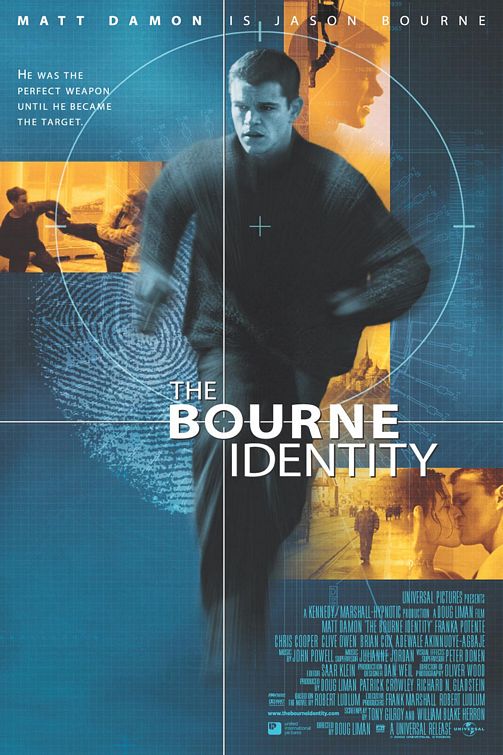
2. Bourne Identity:
I really mean all three movies. This is one of the best triologies out there. Because don't you feel that most trilogies are excellent...until you come to the third movie (Think Spiderman, The Matrix, and X-Men.) However, the Bourne Trilogy doesn't disappoint from Identity to Ultimatum. I loved the movies so much, I decided to read the books. The books are terrible. Horrible. Okay, the first one is okay. The second two...ridiculous. The movies are only loosely based on the books. So this movie makes it on the list by being the rare time that the movie is better than the book.
3. Pride and Prejudice (BBC Version):
If you didn't see this one coming...well, then I've done a terrible job of proclaiming my love for all things Austen. I do like the Kiera Knightely version as well, with all it's beautiful cinematography and heightened sense of romance. But that version fudges over some of the subtleties of character and plot that I feel are essential to understanding Elizabeth Bennett and Mr. Darcy. Which is why the BBC version of Pride and Prejudice wins out. Yes it is long. But it so well captures the characters and plot that you can almost (almost) get away with not reading the book. (Almost.)
4. Lord of the Rings Triology
Yep, another triology made the list. Peter Jackson's attention to detail, amazing casting, and mind-blowing special effects and sets make this hard not to put on this list. Any variation from plot is easily forgiven by the adventure and magic that fill this epic.
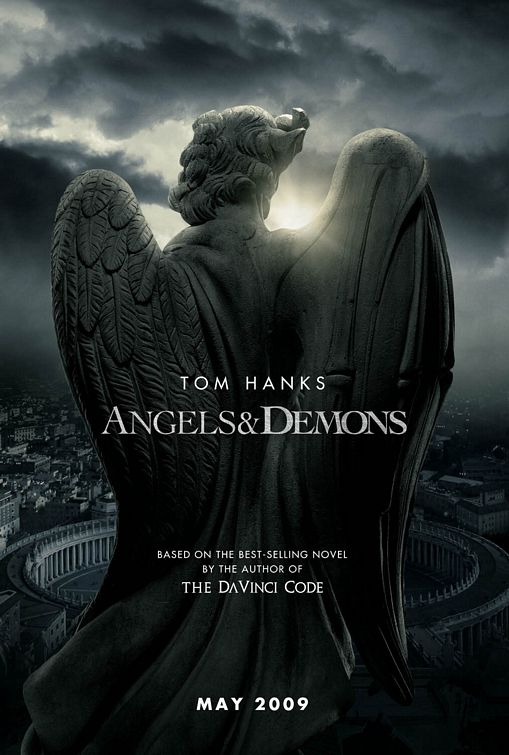
5. Angels and Demons:
As far as books go, I like Da Vinci Code more than Angels and Demons. But as a movie...Angels and Demons wins out. This movie makes it on my list because it captured the beauty of Rome, and the horror of the events. And honestly, I'm pretty sure that if you hadn't read the book, finding out who the true villan was would be just as shocking watching the movie as it was reading the story.
There are movies based on books I read that I want to see. These include The Time Travelers Wife, Revolutionary Road, Where the Wild Things Are, to name a few.
I'm sure that I should include a list of worst movie interpretation of a book. I'll work on that.
What do you think? Anything I missed?
Monday, November 23, 2009
An Incomplete List
Give me one hour of uninterrupted alone time, and I know exactly what I will do with it.
There are abundant things that I should do with that hour. Do the dishes, do the laundry, sweep, sleep, exercise. There are countless things I enjoy that I could also do. Paint, Photoshop, catch up on my DVR recordings, listen to music, blog.
But the one thing I choose above all others?
Read.
Since I was little, reading has been my favorite activity. In second grade, I would grab a blanket and sprawl in the sun on our back porch with novels far too advanced for my age. I didn't understand the subtleties of the plot, the emotions were often beyond the range of my own experience. But the adventure, danger, and romance swept me far away from my 8-year-old life. Any given afternoon, I was exploring tropical jungles, settling the West, or attending balls in the courts of France.
AS a teenager, I would walk around the house with my nose in a book. It was propped behind the sink as I washed dishes, it joined me at the dinner table. And often, I would sneak into the bathroom for completely uninterrupted reading, only to emerge, sometimes an hour later, and usually to frustrated siblings. I could disappear for a weekend at a time, curled up in my bed, exploring space, surviving wars, or discovering radioactivity.
I read nearly every book of the reading lists for high school. I made lists of book to read, and methodically crossed them off.
As soon as I had money, I began buying my own books. If anyone draws a blank on what to get me, they get me books.
Now I horde them. Do not ever, ever ask me to throw out a book. It does not matter that our five bookselves are overflowing and stacked every which way with tattered paperbacks from the book exchange or shiny new hardbacks from the chain store. The books are not books any longer. Each one is a character, a personality, well known and well loved.
I even love the smell of books. Open a brand new book and the smell of paper is intoxicating. I used to study on the second floor of the university library, not for the silence, but for the inviting, soothing smell of the rows upon rows of books.
It is hard for me to come up with a list of favorites. I can name my favorite people or favorite songs much easier than I can my favorite books. But I will do my best.
Some are on this list because of the story, some because of the impact they made when I read them, and others, purely from the joy I have every time I turn the first page.
A Tale of Two Cities

In my mind, this is Dickens' best book. The imagery is breathtaking. The strength of the writing and the plot development never disappoint. Not once.
Pride and Prejudice

I love Austen. Her witty, nearly sarcastic view on women's lives at the time appeals to both my feminine and feminist sides. And there is no character that I love more than Elizabeth Bennett. She is both perfect and flawed, and therefore, completely human.
Harry Potter

Yes, I am counting all 7 as one book. I have read these books more than I have any other (although Pride and Prejudice does come close.) Rowlings mastery at weaving a plot that takes twists never expected, her brilliant character development, and the sheer magic (pun both intended and not) of the books make it so they captivate me just as much the seventh time through as they did the first.
To Kill a Mockingbird

Exquisitely painful and beautiful at the same time, the range of emotions of this book nearly overwhelm me each time I read it. There are few literary characters that make you want to stand beside them as Atticus Finch.
Crime and Punishment

Dostoevsky's examination of guilt, conscience, justification, and redemption are both frightening and captivating, without letting you be sure of which emotion is stronger.
The Hobbit

I was sure at one time that I loved science fiction more than I loved fantasy. Now, I'm not so sure. The one thing I am sure of is that I can trace my shift in feelings back to when I first read a story about a hobbit stepping out of his little round door and setting of in search of gold, adventure, and self-identity.
I think I should stop at 6. Otherwise, I will be perusing my library all night, reading through books and deciding if they should be on my list or not.
This is not be any means a complete list. Not even close. Mary Shelley, Ray Bradbury, Leo Tolstoy all belong on this list as well. Nor is it even close to being a list of books I feel are must reads. I'll save that for another day.
What books are on your "favorite" list?
Let me know, so that, given enough uninterrupted alone hours, I can add them to mine.
There are abundant things that I should do with that hour. Do the dishes, do the laundry, sweep, sleep, exercise. There are countless things I enjoy that I could also do. Paint, Photoshop, catch up on my DVR recordings, listen to music, blog.
But the one thing I choose above all others?
Read.
Since I was little, reading has been my favorite activity. In second grade, I would grab a blanket and sprawl in the sun on our back porch with novels far too advanced for my age. I didn't understand the subtleties of the plot, the emotions were often beyond the range of my own experience. But the adventure, danger, and romance swept me far away from my 8-year-old life. Any given afternoon, I was exploring tropical jungles, settling the West, or attending balls in the courts of France.
AS a teenager, I would walk around the house with my nose in a book. It was propped behind the sink as I washed dishes, it joined me at the dinner table. And often, I would sneak into the bathroom for completely uninterrupted reading, only to emerge, sometimes an hour later, and usually to frustrated siblings. I could disappear for a weekend at a time, curled up in my bed, exploring space, surviving wars, or discovering radioactivity.
I read nearly every book of the reading lists for high school. I made lists of book to read, and methodically crossed them off.
As soon as I had money, I began buying my own books. If anyone draws a blank on what to get me, they get me books.
Now I horde them. Do not ever, ever ask me to throw out a book. It does not matter that our five bookselves are overflowing and stacked every which way with tattered paperbacks from the book exchange or shiny new hardbacks from the chain store. The books are not books any longer. Each one is a character, a personality, well known and well loved.
I even love the smell of books. Open a brand new book and the smell of paper is intoxicating. I used to study on the second floor of the university library, not for the silence, but for the inviting, soothing smell of the rows upon rows of books.
It is hard for me to come up with a list of favorites. I can name my favorite people or favorite songs much easier than I can my favorite books. But I will do my best.
Some are on this list because of the story, some because of the impact they made when I read them, and others, purely from the joy I have every time I turn the first page.
A Tale of Two Cities
In my mind, this is Dickens' best book. The imagery is breathtaking. The strength of the writing and the plot development never disappoint. Not once.
Pride and Prejudice
I love Austen. Her witty, nearly sarcastic view on women's lives at the time appeals to both my feminine and feminist sides. And there is no character that I love more than Elizabeth Bennett. She is both perfect and flawed, and therefore, completely human.
Harry Potter
Yes, I am counting all 7 as one book. I have read these books more than I have any other (although Pride and Prejudice does come close.) Rowlings mastery at weaving a plot that takes twists never expected, her brilliant character development, and the sheer magic (pun both intended and not) of the books make it so they captivate me just as much the seventh time through as they did the first.
To Kill a Mockingbird
Exquisitely painful and beautiful at the same time, the range of emotions of this book nearly overwhelm me each time I read it. There are few literary characters that make you want to stand beside them as Atticus Finch.
Crime and Punishment
Dostoevsky's examination of guilt, conscience, justification, and redemption are both frightening and captivating, without letting you be sure of which emotion is stronger.
The Hobbit
I was sure at one time that I loved science fiction more than I loved fantasy. Now, I'm not so sure. The one thing I am sure of is that I can trace my shift in feelings back to when I first read a story about a hobbit stepping out of his little round door and setting of in search of gold, adventure, and self-identity.
I think I should stop at 6. Otherwise, I will be perusing my library all night, reading through books and deciding if they should be on my list or not.
This is not be any means a complete list. Not even close. Mary Shelley, Ray Bradbury, Leo Tolstoy all belong on this list as well. Nor is it even close to being a list of books I feel are must reads. I'll save that for another day.
What books are on your "favorite" list?
Let me know, so that, given enough uninterrupted alone hours, I can add them to mine.
Wednesday, November 18, 2009
The Lost Symbol
I am finally reading again.
Okay, let me clarify. I am reading for pleasure again. I've been reading large quantities of material over the last several months, but it is hardly what I would call recreational reading. After all, "Anesthesia Techniques for Patients with Ischemic Heart Disease" or "Cricoid Pressure Results in Compression of the Postcricoid Hypopharnx" are hardly pleasurable pursuits at the end of long day. You only think I'm joking.
It has been months since I've read a novel. I did reread the entire Harry Potter series over the summer, but I finished that in July. It's been even longer since I've reviewed a book.
What better way to start reading again than with Dan Brown?
I enjoy Dan Brown novels. They fall into my brain candy category. The stories are interesting, the actual reading easy.
The first Dan Brown novel I read was The DaVinci Code. I love this book. The story and the thoughts behind the story captivated me, and I must admit, spoke to the feminist inside of me. Not to mention make me desperate to travel to Europe.
After reading The DaVinci Code, I was excited to read Dan Brown's other books. I looked forward to The Lost Symbol.

But here is the confession.
The book disappointed me.
Since it is new book, and there may be people out there who haven't finished (or started) it yet, I won't put in any spoilers.
The first part of the book was thrilling. I will admit that. There were a few chapters where I just could not put the book down, partially because my heart was beating fast, and I had to know if things turned out okay or risk not sleeping that night.
I felt the book reached it's climax about half way through the book. I kept waiting for this amazing reveal, something that would cause my jaw to drop and my mind to reel, even just a little.
It never came.
As I reached the end of the book, it became easy to see where the story was heading. After that point, the last several chapters became tedious to get through.
Brown has a way of just slightly overstating things in his book. This would change the world. This could effect everyone. I could see that with the themes of his two previous Robert Langdon books, but with this one, I just couldn't see it. The amazing things of the book were in the research done by the main female character, and while Brown describes some of her work, he does not frame it in a way that shocks or surprises the reader.
Like The DaVinci Code and Angels and Demons, Brown's description of the architecture, art, and history of the settings is breathtaking and detailed. I went to Washington D.C. for a class trip in middle school and reading about the buildings and art in this novel brought back vivid memories of that trip. However, it may have been that desire to maintain historical and cultural accuracy that may have caused the story to come up lacking in the end. I felt it would have been okay to exaggerate just a tiny, tiny bit. Maybe not. Maybe that would defeat the purpose, whatever that may be.
There is also the issue of character. I can easily overlook a slightly poorly written book if I connect strongly to the characters. I do genuinely like Robert Langdon. He is a great main character: logical, sceptical, with phobias included. (Although does anyone else just keep on picturing Tom Hanks?) However, the rest of the characters are 2-dimensional. The main female character in The Lost Symbol could have been interchanged with the main female character in his other novels. Attractive, intelligent, but not much more. The villians, while especially unexpected here (althought I figured it out halfway through) are not complex, but literarily complete evil.
I do not think that The Lost Symbol was a bad book. I rather enjoyed reading (most of) it. But I felt that it fell short of its potential.
Okay, let me clarify. I am reading for pleasure again. I've been reading large quantities of material over the last several months, but it is hardly what I would call recreational reading. After all, "Anesthesia Techniques for Patients with Ischemic Heart Disease" or "Cricoid Pressure Results in Compression of the Postcricoid Hypopharnx" are hardly pleasurable pursuits at the end of long day. You only think I'm joking.
It has been months since I've read a novel. I did reread the entire Harry Potter series over the summer, but I finished that in July. It's been even longer since I've reviewed a book.
What better way to start reading again than with Dan Brown?
I enjoy Dan Brown novels. They fall into my brain candy category. The stories are interesting, the actual reading easy.
The first Dan Brown novel I read was The DaVinci Code. I love this book. The story and the thoughts behind the story captivated me, and I must admit, spoke to the feminist inside of me. Not to mention make me desperate to travel to Europe.
After reading The DaVinci Code, I was excited to read Dan Brown's other books. I looked forward to The Lost Symbol.
But here is the confession.
The book disappointed me.
Since it is new book, and there may be people out there who haven't finished (or started) it yet, I won't put in any spoilers.
The first part of the book was thrilling. I will admit that. There were a few chapters where I just could not put the book down, partially because my heart was beating fast, and I had to know if things turned out okay or risk not sleeping that night.
I felt the book reached it's climax about half way through the book. I kept waiting for this amazing reveal, something that would cause my jaw to drop and my mind to reel, even just a little.
It never came.
As I reached the end of the book, it became easy to see where the story was heading. After that point, the last several chapters became tedious to get through.
Brown has a way of just slightly overstating things in his book. This would change the world. This could effect everyone. I could see that with the themes of his two previous Robert Langdon books, but with this one, I just couldn't see it. The amazing things of the book were in the research done by the main female character, and while Brown describes some of her work, he does not frame it in a way that shocks or surprises the reader.
Like The DaVinci Code and Angels and Demons, Brown's description of the architecture, art, and history of the settings is breathtaking and detailed. I went to Washington D.C. for a class trip in middle school and reading about the buildings and art in this novel brought back vivid memories of that trip. However, it may have been that desire to maintain historical and cultural accuracy that may have caused the story to come up lacking in the end. I felt it would have been okay to exaggerate just a tiny, tiny bit. Maybe not. Maybe that would defeat the purpose, whatever that may be.
There is also the issue of character. I can easily overlook a slightly poorly written book if I connect strongly to the characters. I do genuinely like Robert Langdon. He is a great main character: logical, sceptical, with phobias included. (Although does anyone else just keep on picturing Tom Hanks?) However, the rest of the characters are 2-dimensional. The main female character in The Lost Symbol could have been interchanged with the main female character in his other novels. Attractive, intelligent, but not much more. The villians, while especially unexpected here (althought I figured it out halfway through) are not complex, but literarily complete evil.
I do not think that The Lost Symbol was a bad book. I rather enjoyed reading (most of) it. But I felt that it fell short of its potential.
Sunday, July 5, 2009
Which group are you in?
When I first started this blog, I didn't want something that was just about parenting, or just about medicine, or just about books. I wanted my blog to be pretty much like me. A little bit about everything and a whole lot of love and passion.
In an effort to keep things that way, I am not going to talk about how intern year is going (all 5 days of it.) Because that would have made four posts in a row about internship and medicine, and that is plenty.
So, I'm going to talk about Harry Potter.

I like to put people in categories. People who are readers and people who are non-readers. People who like where they live and people who don't.
I think people fall into three general categories when it comes to Harry Potter. They love Harry Potter, they are completely neutral about Harry Potter, or they hate Harry Potter (either because of the social hype or from some other issue: and believe me, there are people who have issues with Harry Potter. Even though I think that is a waste of time: be concerned about the economy, or global warming, or AIDS in Africa. Let's not get all out of sorts about children's literature... I'm not saying don't have an opinion about it. Because I love opinions. Just, whoa, calm down! But like always, I digress.)
I happen to be in the first category.
I love Harry Potter. I was first introduced to him in college. That's right. College. My roommate was reading the book, I teased her about it, and she basically said "Don't judge until you read." So I read.
And now I'm convinced that everyone would be in the first category, if only they would read.
When I first met Hubster, he was definitely in the category of "non-reader." He hadn't read a novel since his required 12th grade English reading. The last novel he read for pleasure was probably in elementary school.
I convinced him to take me to see the first Harry Potter film when it came out. After we saw the movie, he bought all the books that were out (it was four at the time.) He read them all.
And he has since gone on to move into the reader category. He reads all the time. I've said it before: Sometimes just reading is more important than what you read. I would rather my family read lighthearted novels all the time then a serious book once in their life. (I'm not saying that serious books aren't important: they are. But first, let's just get people reading!)
Before each Harry Potter movie comes out in theaters, Hubster and I both re-read the entire series.
Which makes this my eighth time reading Harry Potter and the Sorcerer's Stone. (Because I read it a couple times before I saw any of the movies.) It is just as entertaining and engaging as the first time.
J.K. Rowling is a superb story teller and creates vivid characters and shocking plot twists. Often dismissed as "just children's literature" her writing is strong enough to hold its own for any audience.
The sixth movie, Harry Potter and the Half-Blood Prince, comes out next week.
 Considering I'm still reading the first book, I don't think I'm going to get through the entire series before I see the movie. (But maybe the same craziness in my life that has prevented me from reading more may prevent me from seeing the film until I've read all 7 books again. Stranger things have happened.)
But regardless...
I'm excited to see the movie. And I'm thoroughly enjoying what may be my favorite books of all time again.
(And believe me...this is not the end of my posting about Harry Potter...there will be more.)
In an effort to keep things that way, I am not going to talk about how intern year is going (all 5 days of it.) Because that would have made four posts in a row about internship and medicine, and that is plenty.
So, I'm going to talk about Harry Potter.
I like to put people in categories. People who are readers and people who are non-readers. People who like where they live and people who don't.
I think people fall into three general categories when it comes to Harry Potter. They love Harry Potter, they are completely neutral about Harry Potter, or they hate Harry Potter (either because of the social hype or from some other issue: and believe me, there are people who have issues with Harry Potter. Even though I think that is a waste of time: be concerned about the economy, or global warming, or AIDS in Africa. Let's not get all out of sorts about children's literature... I'm not saying don't have an opinion about it. Because I love opinions. Just, whoa, calm down! But like always, I digress.)
I happen to be in the first category.
I love Harry Potter. I was first introduced to him in college. That's right. College. My roommate was reading the book, I teased her about it, and she basically said "Don't judge until you read." So I read.
And now I'm convinced that everyone would be in the first category, if only they would read.
When I first met Hubster, he was definitely in the category of "non-reader." He hadn't read a novel since his required 12th grade English reading. The last novel he read for pleasure was probably in elementary school.
I convinced him to take me to see the first Harry Potter film when it came out. After we saw the movie, he bought all the books that were out (it was four at the time.) He read them all.
And he has since gone on to move into the reader category. He reads all the time. I've said it before: Sometimes just reading is more important than what you read. I would rather my family read lighthearted novels all the time then a serious book once in their life. (I'm not saying that serious books aren't important: they are. But first, let's just get people reading!)
Before each Harry Potter movie comes out in theaters, Hubster and I both re-read the entire series.
Which makes this my eighth time reading Harry Potter and the Sorcerer's Stone. (Because I read it a couple times before I saw any of the movies.) It is just as entertaining and engaging as the first time.
J.K. Rowling is a superb story teller and creates vivid characters and shocking plot twists. Often dismissed as "just children's literature" her writing is strong enough to hold its own for any audience.
The sixth movie, Harry Potter and the Half-Blood Prince, comes out next week.
Considering I'm still reading the first book, I don't think I'm going to get through the entire series before I see the movie. (But maybe the same craziness in my life that has prevented me from reading more may prevent me from seeing the film until I've read all 7 books again. Stranger things have happened.)But regardless...
I'm excited to see the movie. And I'm thoroughly enjoying what may be my favorite books of all time again.
(And believe me...this is not the end of my posting about Harry Potter...there will be more.)
Friday, June 19, 2009
Far from the Maddening Crowd.
It's been a very long time since my last book review.
And this particular book has been sitting on my side bar for a long time.

But, okay, here's the confession...
I didn't read it.
I tried. I really did. The title, Far from the Maddening Crowd, just sounds so intriguing and appealing. It was another 1800s English literature book, which I usually just love.
So I really did try.
But I was only able to get about 5 chapters in before I called it quits. Which makes this book only the second book that I have started to read and not finished. The other book is Lord Jim, by Joseph Conrad. I still plan on reading that book, mostly because I loved Heart of Darkness so much. But when I started reading Lord Jim was in the middle of my clinicals during third year of medical school, and I did not have enough reserve brain power to devote to the book at the time.
But I digress.
Why did I not continue to read this book?
Because it was the most tedious thing I have ever tried to read.
Long, drawn-out descriptions of dogs, or farming, or tools. Pages upon pages of conversations at taverns. With so little character and plot development by chapter 5 I just couldn't take it anymore.
It had none of the appeal and entertainment of Austen, or moodiness of Bronte, or wit of Dickens.
Plus, it also had a chauvinistic thread through it that grated on my nerves.
I'm sure that there is someone out there that has read this book. And possibly even liked it. If you know of a reason I should pick this book back up and finish it, let me know.
And this particular book has been sitting on my side bar for a long time.
But, okay, here's the confession...
I didn't read it.
I tried. I really did. The title, Far from the Maddening Crowd, just sounds so intriguing and appealing. It was another 1800s English literature book, which I usually just love.
So I really did try.
But I was only able to get about 5 chapters in before I called it quits. Which makes this book only the second book that I have started to read and not finished. The other book is Lord Jim, by Joseph Conrad. I still plan on reading that book, mostly because I loved Heart of Darkness so much. But when I started reading Lord Jim was in the middle of my clinicals during third year of medical school, and I did not have enough reserve brain power to devote to the book at the time.
But I digress.
Why did I not continue to read this book?
Because it was the most tedious thing I have ever tried to read.
Long, drawn-out descriptions of dogs, or farming, or tools. Pages upon pages of conversations at taverns. With so little character and plot development by chapter 5 I just couldn't take it anymore.
It had none of the appeal and entertainment of Austen, or moodiness of Bronte, or wit of Dickens.
Plus, it also had a chauvinistic thread through it that grated on my nerves.
I'm sure that there is someone out there that has read this book. And possibly even liked it. If you know of a reason I should pick this book back up and finish it, let me know.
Monday, May 4, 2009
The Bell Jar
I was terrified to read this book.

Having studied the poetry of Sylvia Plath during high school and college, I was familiar with her writing, and also knew her tragic life story. I was worried that the book would make me so sad that I wouldn't be able to shake it.
Now, I wish I had read this book earlier.
(I know that a lot of you read this book in high school, but really, there are only so many books you can read, and this one didn't come up. And I think I can appreciate it more now than I would have been able to then.)
The Bell Jar, a semi-autobiographical novel, follows Esther Greenwood, 19 years old and a stellar academic, through her descent into depression. Plath refuses to let her character wallow in self-pity. She doesn't want you to feel sorry for her, doesn't want you to pity her. But in the end, she nearly breaks your heart.
Set in the 1950s, at the height of "traditional gender roles," a large struggle for Esther is what is expected of her versus what she wants for herself. She wants a family, wants love, but feels disillusioned by the women around her. She wants to be successful, a poet or a teacher, but has no proof that this is not incompatible with her other desires.
The writing is both simple and provocative. Full of the metaphors that Plath is famous for, the story is both straight forward and poetic. Esther sees her life as a fig tree, each possibility, each choice a ripe fig at the end of branches. But instead of feeling that all these figs are within her reach to harvest, she feels stuck at the trunk, as the figs blacken and fall to the ground.
Told exclusively through Esther's mind, the book offers no relief from the stifling, oppressive air she experiences while under the bell jar. But I have never read a more chilling, accurate, or believable account of depression.
This is a must read for anyone who has dealt with depression on any level, or known anyone with depression.
I came away, not pulled down by the story as I had thought I would be, but amazed and impressed by how fresh the air really is out from under the bell jar.
Thursday, April 30, 2009
City of Ember
It's a kid book. I know that. Give me a break. I've been a little tired, and all the heavy literature I've been reading lately have made my brain feel heavy.
So I needed a good dose of brain candy. And I have to say, this was a delicious serving.
I first heard of this book the way I'm sure most people did: after they made the movie.

And since the book is written approximately for ages 10-12, I doubt any of you have read it. But if you write a book, and less than 5 years later, it is a movie that included toys in many fast-food kids' meals, you've done something right.
If you're looking for a fun, super fast (I read the entire book in about 6 hours) young dystonian/adventure book, this fits the bill.
The city of Ember is surrounded by darkness. No one ever goes out into, and no one has ever come to Ember out of it. The darkness within Ember is held at bay by lights attached to every building, at every corner. All the lights are powered by an ancient generator. But the lights are beginning to flicker, leaving the city and all its occupants in the dark, for longer and longer periods.
Two young children, one motivated by dreams of a city of light, desperately search for a way to lead their families through the darkness.
I enjoyed the book. There are two other books in the series. Which leads me to my feelings on series. As far as movies go, they are usually just disasters (unless we are talking about Jason Bourne, and then there could not be enough movies.) But as far as books go, I just love the story to keep going and going and going. I'm always excited when there is another book.
But the reviews for the next two books weren't very good.
Have any of you read them? Any opinions? And what about the movie? I kind of want to see it now (because yes, I enjoy kid movies.) If you saw it, did you like it? And could I watch it with my six year old?
So I needed a good dose of brain candy. And I have to say, this was a delicious serving.
I first heard of this book the way I'm sure most people did: after they made the movie.
And since the book is written approximately for ages 10-12, I doubt any of you have read it. But if you write a book, and less than 5 years later, it is a movie that included toys in many fast-food kids' meals, you've done something right.
If you're looking for a fun, super fast (I read the entire book in about 6 hours) young dystonian/adventure book, this fits the bill.
The city of Ember is surrounded by darkness. No one ever goes out into, and no one has ever come to Ember out of it. The darkness within Ember is held at bay by lights attached to every building, at every corner. All the lights are powered by an ancient generator. But the lights are beginning to flicker, leaving the city and all its occupants in the dark, for longer and longer periods.
Two young children, one motivated by dreams of a city of light, desperately search for a way to lead their families through the darkness.
I enjoyed the book. There are two other books in the series. Which leads me to my feelings on series. As far as movies go, they are usually just disasters (unless we are talking about Jason Bourne, and then there could not be enough movies.) But as far as books go, I just love the story to keep going and going and going. I'm always excited when there is another book.
But the reviews for the next two books weren't very good.
Have any of you read them? Any opinions? And what about the movie? I kind of want to see it now (because yes, I enjoy kid movies.) If you saw it, did you like it? And could I watch it with my six year old?
Monday, April 27, 2009
The Handmaid's Tale
I guess it's time for another confession.
I love me a good dystopian novel. Being a rather optimistic and cheerful person, this usually surprises people.
Maybe they cater to my sarcastic side. Maybe they are a way to cope with all the gloom-and-doom-end-of-the-earth possibilities my dad fretted over at the dinner table. After all, at least nothing could be as bad as what happened in the books I was reading, so what did I have to worry about?
1984, Brave New World, The Giver, Fahrenheit 451 (to name a few) are among some of my favorite books.
A surprising number of dystopian novels are assigned reading during high school. Maybe this is where I get my love of them. They felt like some of the first grown-up books I read.
So, after reading the back of The Handmaid's Tale, I was surprised that 1) I hadn't read it earlier and 2) I hadn't even heard of it during high school (which, it turns out is a good thing. This is NOT a book a high schooler should crack open.)

After reading this book, I feel like it is a book I'm expected to hate. With all its descriptive language, demoralizing situations, and almost dismissal of the concept of ingrained humanity and dignity, I feel that few people I know would enjoy the book. Most would probably not even finish it.
So, even though I "should" hate it, I don't.
Margaret Atwood's sparse and austere story follows a woman through the overthrow of the United States and the implementation of a militant theocracy.
It is a time where the oceans and air are toxic from pollution, nuclear energy has gone awry, women are over-zealous on birth-control and abortion. All these factors have lead to a precipitous drop in the birth rate. Healthy infants become the most prized commodity.
The main character, found to be one of the few women healthy and uncontaminated enough to still bare children, is stripped of her relationships, her dreams, her right to read, even her name, to be farmed out to high-ranking families, in hopes that she will conceive and bare that family a baby.
Marginalized, but highly valued, the Handmaids only role in society is to be shipped from infertile couple to infertile couple in order to "replenish the earth."
The new government spends a lot of time talking about how modern society had taken away everything of value to women. They no longer felt child-bearing was important. They no longer viewed their bodies as sacred, subjecting them to surgery and vulgar fashions. Relationships no longer had any meaning, as both men and women jumped from relationship to relationship.
But, like all great dystopian novels, that is where the great irony lays. Through helping women "fulfill their greatest potential," the women are stripped of identity and worth. Sex loses all of its intimacy and meaning, and becomes purely a commodity, a business transaction.
Although this is the prevelant theme throughout Atwood's book, I was just as intrigued by her commentary about other social issues. Accused on only being "man-hating propaganda" I felt that the arguments were infinitely beyond the supression of women.
The new government touts itself as a more holy, pure religion. This new belief system is forced upon each individual. Conform, or die. It is the eptimoe of religion without spirituality. Prayers are called in, not said, not felt.
What matters more? Freedom to, or freedom from. The argument in the novel is that in order to guarentee freedome from, any freedom to must be restricted or eliminated.
The nameless main character glides through all these morality issues, nearly too numb from her own losses to react. Mostly, she can only observe.
I desperately wanted her to find her happy ending. To find her daughter that had been stripped from her. To once again feel a connection to another person.
But, once again, like all great dystopian novels, the Handmaid's Tale givens no answers.
I love me a good dystopian novel. Being a rather optimistic and cheerful person, this usually surprises people.
Maybe they cater to my sarcastic side. Maybe they are a way to cope with all the gloom-and-doom-end-of-the-earth possibilities my dad fretted over at the dinner table. After all, at least nothing could be as bad as what happened in the books I was reading, so what did I have to worry about?
1984, Brave New World, The Giver, Fahrenheit 451 (to name a few) are among some of my favorite books.
A surprising number of dystopian novels are assigned reading during high school. Maybe this is where I get my love of them. They felt like some of the first grown-up books I read.
So, after reading the back of The Handmaid's Tale, I was surprised that 1) I hadn't read it earlier and 2) I hadn't even heard of it during high school (which, it turns out is a good thing. This is NOT a book a high schooler should crack open.)
After reading this book, I feel like it is a book I'm expected to hate. With all its descriptive language, demoralizing situations, and almost dismissal of the concept of ingrained humanity and dignity, I feel that few people I know would enjoy the book. Most would probably not even finish it.
So, even though I "should" hate it, I don't.
Margaret Atwood's sparse and austere story follows a woman through the overthrow of the United States and the implementation of a militant theocracy.
It is a time where the oceans and air are toxic from pollution, nuclear energy has gone awry, women are over-zealous on birth-control and abortion. All these factors have lead to a precipitous drop in the birth rate. Healthy infants become the most prized commodity.
The main character, found to be one of the few women healthy and uncontaminated enough to still bare children, is stripped of her relationships, her dreams, her right to read, even her name, to be farmed out to high-ranking families, in hopes that she will conceive and bare that family a baby.
Marginalized, but highly valued, the Handmaids only role in society is to be shipped from infertile couple to infertile couple in order to "replenish the earth."
The new government spends a lot of time talking about how modern society had taken away everything of value to women. They no longer felt child-bearing was important. They no longer viewed their bodies as sacred, subjecting them to surgery and vulgar fashions. Relationships no longer had any meaning, as both men and women jumped from relationship to relationship.
But, like all great dystopian novels, that is where the great irony lays. Through helping women "fulfill their greatest potential," the women are stripped of identity and worth. Sex loses all of its intimacy and meaning, and becomes purely a commodity, a business transaction.
Although this is the prevelant theme throughout Atwood's book, I was just as intrigued by her commentary about other social issues. Accused on only being "man-hating propaganda" I felt that the arguments were infinitely beyond the supression of women.
The new government touts itself as a more holy, pure religion. This new belief system is forced upon each individual. Conform, or die. It is the eptimoe of religion without spirituality. Prayers are called in, not said, not felt.
What matters more? Freedom to, or freedom from. The argument in the novel is that in order to guarentee freedome from, any freedom to must be restricted or eliminated.
The nameless main character glides through all these morality issues, nearly too numb from her own losses to react. Mostly, she can only observe.
I desperately wanted her to find her happy ending. To find her daughter that had been stripped from her. To once again feel a connection to another person.
But, once again, like all great dystopian novels, the Handmaid's Tale givens no answers.
Sunday, April 19, 2009
Wuthering Heights
I'm sure that most people read this book sooner in their lives than I did. But the occasion just never came up. Unlike most of Austen's books, I wasn't surrounded by people who had read and loved this novel.
The only person who has told me anything about the book was my mom. And she HATED it! Which didn't motivate me to run out and read it.
But after some thought, I decided I really should. After all, it is a classic. And can I really call myself of lover of classical British literature without reading Wuthering Heights?

My first thought about the book was the odd voice that the story is told through. Not first person, not third person. It is not told by one of the main characters. But rather it is told as a story, the housekeeper/nanny related the going-ons of Wuthering Heights to an individual who is new to the area. The entire story is slanted by the housekeepers personal feelings towards the characters, and thus it was difficult to develop my own opinions of the different people.
Heathcliff should be the villan that all villans are compared to. He is the standard of all villans. Bitter because of his childhood friend, Catherine, bestowed her love on someone else, he sets out to destroy the happiness of everyone related to her and her new family. He sets out by financially ruining Catherine's brother, but does not stop there. He manipulates everyone until he has complete physical and emotional control over everyone around him.
The dispair that he brings with him is tangible in every page of Emily Bronte's story. The oppressive presence of Heathcliff is unsurpassed by any book I have ever read.
Nearly done with the book, I felt that there was no way for the story to end happily. Nearly everyone had died, many purely because of the lack of a nurturing hand and the hope of joy. The "heroine" had also come under Heathcliff's powers and slowly I watched her change into a bitter, detached individual instead of the vivrant, caring girl she was.
But happiness came, just as it always should. It came for the heroine and her love. But it never comes for Heathcliff, despite his desperation for it. He never feels the peace and serentiy that love can brings. Even to the end, everything was extreme, desperate, and wild for Heathcliff.
Most literary villans have their redeeming quality. But Heathcliff had none. He could have used his love of Catherine as a redeeming quality. But he never did. He treated his own feeling of love as a weakness, as a reason for revenge.
For the other characters, it was their love that became their redeeming quality. How they used it to be long-suffering, self-less, forgiving, and sacrificing. And in the end, peace came to them.
In the end, it is not what we have, but what we do with it that determines what we are. And no where is there a more powerful allegory of this than Wuthering Heights.
The only person who has told me anything about the book was my mom. And she HATED it! Which didn't motivate me to run out and read it.
But after some thought, I decided I really should. After all, it is a classic. And can I really call myself of lover of classical British literature without reading Wuthering Heights?
My first thought about the book was the odd voice that the story is told through. Not first person, not third person. It is not told by one of the main characters. But rather it is told as a story, the housekeeper/nanny related the going-ons of Wuthering Heights to an individual who is new to the area. The entire story is slanted by the housekeepers personal feelings towards the characters, and thus it was difficult to develop my own opinions of the different people.
Heathcliff should be the villan that all villans are compared to. He is the standard of all villans. Bitter because of his childhood friend, Catherine, bestowed her love on someone else, he sets out to destroy the happiness of everyone related to her and her new family. He sets out by financially ruining Catherine's brother, but does not stop there. He manipulates everyone until he has complete physical and emotional control over everyone around him.
The dispair that he brings with him is tangible in every page of Emily Bronte's story. The oppressive presence of Heathcliff is unsurpassed by any book I have ever read.
Nearly done with the book, I felt that there was no way for the story to end happily. Nearly everyone had died, many purely because of the lack of a nurturing hand and the hope of joy. The "heroine" had also come under Heathcliff's powers and slowly I watched her change into a bitter, detached individual instead of the vivrant, caring girl she was.
But happiness came, just as it always should. It came for the heroine and her love. But it never comes for Heathcliff, despite his desperation for it. He never feels the peace and serentiy that love can brings. Even to the end, everything was extreme, desperate, and wild for Heathcliff.
Most literary villans have their redeeming quality. But Heathcliff had none. He could have used his love of Catherine as a redeeming quality. But he never did. He treated his own feeling of love as a weakness, as a reason for revenge.
For the other characters, it was their love that became their redeeming quality. How they used it to be long-suffering, self-less, forgiving, and sacrificing. And in the end, peace came to them.
In the end, it is not what we have, but what we do with it that determines what we are. And no where is there a more powerful allegory of this than Wuthering Heights.
Sunday, March 29, 2009
The Kite Runner
The book was better than the movie. That's what we always hear.
Well, I don't think I'll ever know. Because after reading the book, I'm not sure I ever want to see the movie.
Which was the original reason I read The Kite Runner. I saw the movie at the rental store. Read the back. Saw "based on the novel." Decided to read the book first.

Don't get me wrong. I'm glad I read The Kite Runner. I think.
It is "about" Afghanistan. And really, how much do we know about that country, its people and culture? Even with all the current events and our history with this country, we know so little about it. Most of us know more about Japan, China, Russia, and Australia than we do about any Middle East country.
The Kite Runner tells the tale of the friendship between two young boys, told in a style that spoke to me like fact. Woven through the story are themes of loyalty, betrayal, and guilt.
We are used to thinking of main characters as heroes. And heroes always do the right thing. But not Khaled Hosseini's hero.
Living with the guilt of betrayal, Amir, the book's main character, spends most of his life thinking about how things could have been different had he had done the right thing.
An amazing look at Afghan culture, The Kite Runner makes us wonder if there is ever a way to make up for past wrongs. Given the chance, can you really change things? Can you make amends for the sins of your past?
I've said before that a good book is one that you want to read over and over again. And the book loses nothing with repeat readings. This of course, is a working definition. The Kite Runner was an amazing book. But one full of graphic, heart-wrenching stories and details. It is too painful and emotional for me to want to read again.
And I don't think I'll ever choose to find out if the book was better than the movie.
Well, I don't think I'll ever know. Because after reading the book, I'm not sure I ever want to see the movie.
Which was the original reason I read The Kite Runner. I saw the movie at the rental store. Read the back. Saw "based on the novel." Decided to read the book first.
Don't get me wrong. I'm glad I read The Kite Runner. I think.
It is "about" Afghanistan. And really, how much do we know about that country, its people and culture? Even with all the current events and our history with this country, we know so little about it. Most of us know more about Japan, China, Russia, and Australia than we do about any Middle East country.
The Kite Runner tells the tale of the friendship between two young boys, told in a style that spoke to me like fact. Woven through the story are themes of loyalty, betrayal, and guilt.
We are used to thinking of main characters as heroes. And heroes always do the right thing. But not Khaled Hosseini's hero.
Living with the guilt of betrayal, Amir, the book's main character, spends most of his life thinking about how things could have been different had he had done the right thing.
An amazing look at Afghan culture, The Kite Runner makes us wonder if there is ever a way to make up for past wrongs. Given the chance, can you really change things? Can you make amends for the sins of your past?
I've said before that a good book is one that you want to read over and over again. And the book loses nothing with repeat readings. This of course, is a working definition. The Kite Runner was an amazing book. But one full of graphic, heart-wrenching stories and details. It is too painful and emotional for me to want to read again.
And I don't think I'll ever choose to find out if the book was better than the movie.
Tuesday, March 24, 2009
Life of Pi
Have you ever had the experience of reading a book, and then wondering why you haven't heard about the book before?
That's how I felt when I read Life of Pi.

I had never heard of the book. No one I know had ever mentioned it casually in conversation. To be completely honest, the reason I read it was because it was on a list of books I found on Facebook.
I'm glad I did. This book approaches the quality of books like Death Comes for the Archbishop or The Chosen. Books that have become required high school reading. (Maybe it is somewhere and my school just missed it.)
The back cover of the book said "A story to make you believe in God."
What more compelling reason do you need to pick up the book.
Life of Pi tells the story of Pi Patel, a young boy moving with his family from India to Canada. During the trip, the boat sinks, and he becomes stranded on a lifeboat. His only company: a full grown Bengal tiger.
Through exquisite story telling and heart-wrenching detail, Yann Martel examines what it means to be human. In austere surroundings, what is it that separates us from animals? During survival, what parts of humanity are you willing to give up and which do you hang on to until your last breath?
Pi's story is incredible. But as I read, I didn't ask questions. I just believed every word. Every event. Every detail.
At the end, he is questioned about your story. It is only when Pi is met by doubt and disbelief by others that a little doubt and disbelief enter your head. Is that what makes us doubt in the first place? Other people's doubt and not our own disbelief of things?
I'm not sure that the story did what the cover said. As in, I didn't have a spiritual epiphany. I'm not even sure I felt with an overwhelming sense of awe.
Many of the reviews of the book described it as a "study of religion" or "a reflection on the many meanings of religion." I didn't take that away from the book. Arguably the first part of the book is about the main characters own religious discoveries, but that is not a continued theme.
For me, it was more a discussion on belief and doubt. Humanity versus animal nature.
But I guess that is what makes books like this so great. Every reader is free to interpret as they will.
That's how I felt when I read Life of Pi.
I had never heard of the book. No one I know had ever mentioned it casually in conversation. To be completely honest, the reason I read it was because it was on a list of books I found on Facebook.
I'm glad I did. This book approaches the quality of books like Death Comes for the Archbishop or The Chosen. Books that have become required high school reading. (Maybe it is somewhere and my school just missed it.)
The back cover of the book said "A story to make you believe in God."
What more compelling reason do you need to pick up the book.
Life of Pi tells the story of Pi Patel, a young boy moving with his family from India to Canada. During the trip, the boat sinks, and he becomes stranded on a lifeboat. His only company: a full grown Bengal tiger.
Through exquisite story telling and heart-wrenching detail, Yann Martel examines what it means to be human. In austere surroundings, what is it that separates us from animals? During survival, what parts of humanity are you willing to give up and which do you hang on to until your last breath?
Pi's story is incredible. But as I read, I didn't ask questions. I just believed every word. Every event. Every detail.
At the end, he is questioned about your story. It is only when Pi is met by doubt and disbelief by others that a little doubt and disbelief enter your head. Is that what makes us doubt in the first place? Other people's doubt and not our own disbelief of things?
I'm not sure that the story did what the cover said. As in, I didn't have a spiritual epiphany. I'm not even sure I felt with an overwhelming sense of awe.
Many of the reviews of the book described it as a "study of religion" or "a reflection on the many meanings of religion." I didn't take that away from the book. Arguably the first part of the book is about the main characters own religious discoveries, but that is not a continued theme.
For me, it was more a discussion on belief and doubt. Humanity versus animal nature.
But I guess that is what makes books like this so great. Every reader is free to interpret as they will.
Subscribe to:
Posts (Atom)